





True Discipleship in Christ is Tested in Community
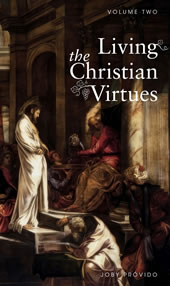
It is easy to be holy in the silence of an empty church, but the real test of faith begins the moment you walk out the doors. Bridging the gap between a sincere desire for Christian charity and the messy, frustrating reality of human relationships requires more than just good intentions. Living the Christian Virtues: Volume 2 provides a practical, step-by-step manual for mastering the interpersonal virtues. Discover how to respond to stressful workdays, difficult conversations, and unexpected interruptions with the unshakeable peace and grace of Christ.
THE BOOK


A Roadmap for the Social Virtues
While the first volume laid the foundation for interior discipleship, Volume 2 shifts the focus entirely outward. You will dive deeply into 22 specific social virtues, including Gentleness, Holy Silence, Cheerfulness, Sociability, and Meekness. Instead of treating virtue as a vague spiritual ideal, this book approaches it as a spiritual muscle. You will learn exactly how to overcome the friction of modern digital communication, navigate toxic environments, and heal fractured relationships by turning supernatural charity into a daily, actionable habit.
Mirroring the previous volume, you will likewise learn the following.
- The 3-Level Progression System: A clear journey mapping your growth through 32 core virtues. Move step-by-step from foundational daily discipline (Level 1: Receptive Readiness), to active interior formation (Level 2: Active Submission/Formation), and ultimately to the heroic surrenders of mature sanctity (Level 3: Integrated Integrity).
- Modern-Day Examples: Discover how these ancient virtues are lived out today. From a parent navigating family discipline with prudence, to a professional facing ethical dilemmas, to a parishioner choosing forgiveness over resentment—every virtue includes relatable, modern contexts.
- The Power of Habit Triggers: Concrete, numbered steps that teach you how to attach short prayers, silent pauses, and moral choices directly to your everyday routine.
Track Your Growth: The Companion Journal
When used alongside the companion Virtue Journal (sold separately), you can visually track your daily growth, identify hidden spiritual blind spots, and build tailored action plans to advance through every stage of virtue.
The journal operationalizes the book’s 3-Level framework into a structured daily tracking page. Begin your morning with a clear commitment, identify your behavioral triggers, and end the day with an evening review to discern where you cooperated with grace and where you resisted.
READ THE WAY YOU WANT
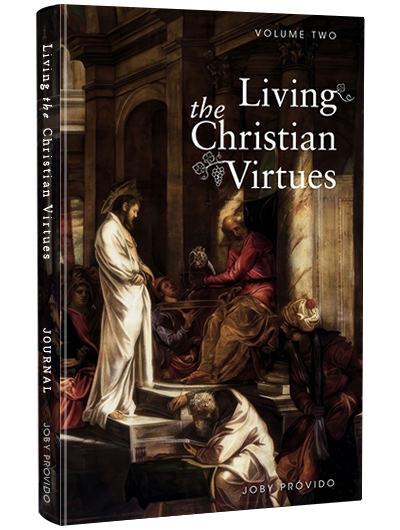
| Paperback | ||
|---|---|---|
| ISBN 13 | 979-8176477504 | |
| ASIN | B0HKT1V6YT | |
| Publisher | Kindlings Press | |
| Publication Date | September 23, 2026 | |
| Language | English (American) | |
| Size | 6" x 9" | |
| Pages | 202 cream | |
| Cover | Full color, matte-finished | |
| BUY ON AMAZON | ||

In the Philippines?
Order the books locally and get them faster.
VOLUME 1 BUNDLE, ONLY ₱1395.00
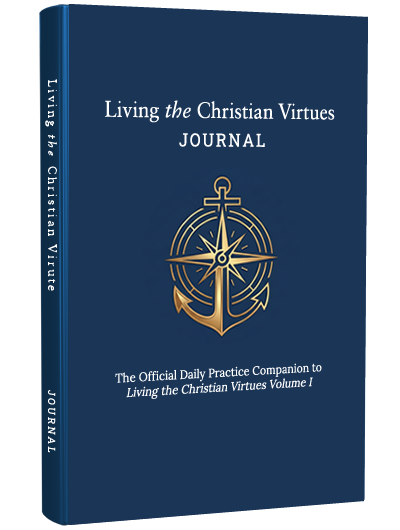
| Journal | ||
|---|---|---|
| ISBN 13 | Not Applicable | |
| ASIN | B0HKRMT5DK | |
| Publisher | Kindlings Press | |
| Publication Date | September 23, 2026 | |
| Language | English (American) | |
| Size | 6" x 9" | |
| Pages | 200 cream | |
| Cover | Full color, matte-finished | |
| BUY ON AMAZON | ||
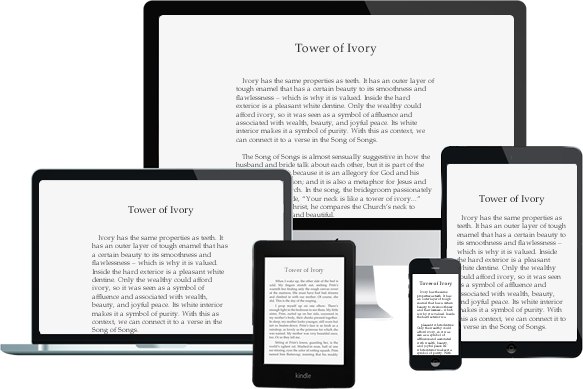
| Kindle Ebook by Amazon | |
|---|---|
| File Size | 630 KB |
| ASIN | B0HKW4QPMC |
| Publisher | Kindlings Press |
| Publication Date | September 24, 2026 |
| Print Length | 220 pages |
| Language | English (American) |
| Page Flip | Enabled |
| X-ray | Not Enabled |
| Word Wise | Enabled |
| Enhanced Typesetting | Enabled |
| Page Flip | Enabled |
|
Download the free Kindle App and start reading today. 


|
|
| BUY ON AMAZON | |
Now an AUDIO BOOK you can listen to!
Listen as you drive, workout, or bask under the sun.Excerpts
Introduction
Our ultimate goal in this life is staggeringly simple yet incredibly profound: we are called to become saints. In the rich language of the Catholic faith, this means striving for complete union with God here on earth so that we may share in his divine life for all eternity.
Because God is supernatural, living a life in communion with Him requires more than just human effort; we need an instrument to live a life so far above our natural capacity, just as a diver needs gear to breathe underwater.
That instrument is Sanctifying Grace. Grace is the unmerited gift that makes us holy, but as Saint James reminds us, faith without works is dead. We are required to actively cooperate with God’s grace, allowing it to animate our daily actions until doing the good becomes second nature. This habitual and firm disposition to do the good is what the Church calls a virtue.
However, virtues do not appear by magic. Like mastering a musical instrument or excelling in a sport, acquiring virtue requires the deliberate friction of practice, failure, and the determination to try again. Heroic virtue—the kind the Church looks for when canonizing a saint—is the result of countless hidden battles where we overcome our fallen nature and choose to cooperate with God.
A Configuration to Christ
If we are going to undergo the difficult work of changing ourselves, we must have a flawless model. In the beginning, humanity was perfectly designed to live in harmony with God, but original sin disfigured us. We lost the "family resemblance" to our Creator.
Jesus Christ, the Word made flesh, solves this predicament. By instituting the Church and her sacraments, Christ provides the means for us to be reconfigured to him. For example, In Baptism, we are configured to his death and resurrection; in the Eucharist, we are transformed into the very Lord we receive; in Matrimony and Holy Orders, we are configured to his sacrificial love and service.
The bishops and priests of the Church constantly admonish us to become alter Christus—other Christs—in the world. Cultivating the Christian virtues is the practical, daily execution of this configuration. When we practice the virtues explored in this volume—from the theological heights of Acceptance of Divine Mystery and Charity, to the grounded, everyday realities of Orderliness, Courtesy, and Sociability—we are slowly chiseling away the disfigurement of sin. We do this in the joyful hope that when we finally stand before the Father, He will recognize the face of His Son in us and say, "Welcome home".
The Architecture of Everyday Holiness
This book is designed to bridge the gap between lofty theological ideals and the gritty reality of modern life. It is easy to want to be courageous, magnificent, or pure in theory; it is entirely different to practice these virtues when stuck in traffic, navigating a difficult workplace, or managing a chaotic household.
To aid in this journey, each chapter examines a specific virtue through the lens of Sacred Scripture, the teachings of St. Thomas Aquinas, and the rich tradition of the Church. More importantly, it breaks down the cultivation of each virtue into three accessible levels of practical steps:
Level 1 focuses on fundamental receptivity and basic human habits.
Level 2 demands active moral effort and the disciplining of our natural reactions.
Level 3 challenges the soul to heroic execution and sacrificial love.
These steps deliberately avoid extreme asceticism in favor of actions that are entirely feasible for a busy layperson, parent, or professional.
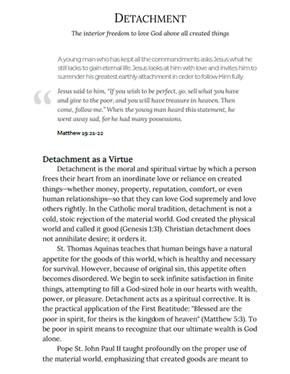
Detachment
The interior freedom to love God above all created thingsA young man who has kept all the commandments asks Jesus what he still lacks to gain eternal life. Jesus looks at him with love and invites him to surrender his greatest earthly attachment in order to follow Him fully.
" Jesus said to him, “If you wish to be perfect, go, sell what you have and give to the poor, and you will have treasure in heaven. Then come, follow me.” When the young man heard this statement, he went away sad, for he had many possessions.
Matthew 19:21-22
Detachment as a Virtue
Detachment is the moral and spiritual virtue by which a person frees their heart from an inordinate love or reliance on created things—whether money, property, reputation, comfort, or even human relationships—so that they can love God supremely and love others rightly. In the Catholic moral tradition, detachment is not a cold, stoic rejection of the material world. God created the physical world and called it good (Genesis 1:31). Christian detachment does not annihilate desire; it orders it.
St. Thomas Aquinas teaches that human beings have a natural appetite for the goods of this world, which is healthy and necessary for survival. However, because of original sin, this appetite often becomes disordered. We begin to seek infinite satisfaction in finite things, attempting to fill a God-sized hole in our hearts with wealth, power, or pleasure. Detachment acts as a spiritual corrective. It is the practical application of the First Beatitude: "Blessed are the poor in spirit, for theirs is the kingdom of heaven" (Matthew 5:3). To be poor in spirit means to recognize that our ultimate wealth is God alone.
Pope St. John Paul II taught profoundly on the proper use of the material world, emphasizing that created goods are meant to serve human dignity and the common good, not to become idols that enslave us. When we make a good thing (like financial security or a career) into an ultimate thing, it becomes an idol. Detachment is the virtue that smashes these idols. It allows us to use the things of this world with immense gratitude when we have them, and to remain perfectly at peace when we lose them, recognizing that this world is not our final home.
Fruits and Promises of Detachment
The most immediate fruit of detachment is an exhilarating, profound interior freedom. When a soul no longer grips the things of this earth tightly, it cannot be crushed when those things are taken away. The detached Christian lives with open hands. Because they are not enslaved by the anxiety of losing their wealth, their status, or their comforts, they experience a deep, abiding peace.
Morally, detachment makes genuine charity possible. You cannot freely give what you are terrified to lose. When we are detached from our money and time, we can become radically generous to the poor and the marginalized. Practically, detachment simplifies our lives, freeing us from the exhausting treadmill of consumerism and the endless pursuit of "more." It promises the joy of a pilgrim who travels light, unburdened by heavy luggage, able to run swiftly toward the Kingdom of Heaven.
Vices and Dispositions Opposed to Detachment
The primary vices opposed to detachment are greed, materialism, worldly anxiety, and idolatry.
Greed (or avarice) is the disordered desire to acquire and hoard wealth and possessions. It blinds the soul to the needs of others and breeds a constant, gnawing dissatisfaction. Materialism is the worldview that physical comfort and worldly success are the ultimate goals of human existence, completely suffocating the spiritual life.
Worldly anxiety is a subtle but pervasive vice opposed to detachment. It is the frantic, sleepless worry over maintaining our lifestyle, our investments, or our reputation. It signals a heart that trusts more in its bank account than in divine providence.
Finally, idolatry is the ultimate failure of detachment. While modern people rarely bow down to golden statues, we commit idolatry whenever we allow a relationship, a political ideology, a career, or a standard of living to take the place of God as the central organizing principle of our lives.
Examples of Detachment
Jesus Christ is the supreme model of detachment. Though He was the King of the Universe, He entered the world in poverty, borrowing a manger for His birth. During His ministry, He noted that "Foxes have dens and birds of the sky have nests, but the Son of Man has nowhere to rest his head" (Luke 9:58). His detachment reached its terrifying and glorious summit on the Cross, where He was stripped of His garments, His followers, His reputation, and even His breath, surrendering everything entirely to the Father.
The Blessed Virgin Mary displayed agonizing and perfect detachment at the foot of the Cross. A mother's natural instinct is to cling to her child, to protect him at all costs. Yet, Mary's love was perfectly ordered to the will of God. She did not physically fight the Roman guards or curse heaven; she detached even from her maternal desire to keep Jesus alive on earth, offering Him back to the Father for the salvation of the world.
Among the saints, St. Anthony of the Desert provides a striking contrast to the rich young man in the Gospel. As a wealthy young heir, Anthony walked into a church and heard the exact same words proclaimed: "Go, sell what you have and give to the poor." Unlike the rich young man who went away sad, Anthony took the words literally. He sold his massive estate, gave the money to the poor, and walked into the Egyptian desert to seek God alone. His radical detachment made him the father of Christian monasticism and a spiritual giant whose freedom still inspires the Church today.
Detachment in Everyday Modern Life
In a culture obsessed with accumulation, upgrading, and image management, practicing detachment is a radical witness to the Gospel.
In the realm of personal finance and possessions, a Catholic practices detachment by resisting the urge to constantly upgrade to the newest smartphone, the larger house, or the luxury car when their current possessions work perfectly well. They view their surplus income not as a ticket to a more lavish lifestyle, but as a resource entrusted to them by God to alleviate the suffering of the poor.
Practical Ways to Cultivate Detachment
Cultivating detachment is inherently painful because it requires us to break attachments that our fallen nature desperately wants to keep. Theologically, we grow in this virtue by contemplating the brevity of human life. Remembering our mortality—that we will take absolutely nothing with us when we die—has a wonderful way of loosening our grip on earthly things. The Eucharist, where Christ gives Himself to us completely stripped and hidden, is our ultimate nourishment for this journey.
Humanly, we must practice detachment through the physical discipline of letting things go. If we only practice "spiritual" detachment in our minds but our closets are overflowing and our calendars are frantic, we are deceiving ourselves. We must engage in the physical act of giving things away and denying ourselves legitimate pleasures to prove to our bodies that our souls are in charge.
Detachment becomes a stable, liberating habit when we repeatedly choose to open our hands, surrendering our goods, our plans, and our loved ones to the providence of God. Here is a plan:
Level 1: Material Restraint (Steps 1-3): Breaking the chains of consumerism by managing our physical possessions, resisting the urge to buy, and learning to live with less.
Level 2: Emotional and Ego Detachment (Steps 4-7): Loosening our grip on our reputation, our digital addictions, and our demand that life goes exactly according to our plans.
Level 3: Spiritual Surrender (Steps 8-10): Giving away things we actually love, surrendering our relationships to God, and placing our entire will in His hands.
Step 1. Institute a 24-hour waiting period for purchases
Online shopping has made it dangerously easy to indulge every fleeting desire instantly. Detachment requires us to put a wedge of time between the impulse to buy and the act of purchasing.
Form the habit: Whenever you want to buy something that is not an absolute, immediate necessity (like groceries), place it in your online cart or write it down, and force yourself to wait a full 24 hours. Often, the artificial sense of urgency will fade, and you will realize you do not actually need the item.
Step 2. Regularly purge your unused possessions
We accumulate physical clutter at an alarming rate, and this clutter anchors our hearts to the material world. We must physically practice the act of letting go.
Form the habit: Once a month, walk through your closet, garage, or kitchen. Find five items you have not used or worn in the last six months. Put them in a bag and donate them to charity that same week. Do not allow your house to become a warehouse for unused goods.
Step 3. Fast from a legitimate daily comfort
Detachment is not just about avoiding sin; it is about proving we are not enslaved by perfectly good things. If we cannot say "no" to a cup of coffee, we will not have the strength to say "no" to serious temptation.
Form the habit: Choose one small, legitimate comfort to detach from today. Drink your coffee black instead of with cream, take a slightly colder shower, or drive to work in total silence without the radio. Offer the small discomfort to God.
HIGHLIGHTS
THE AUTHOR
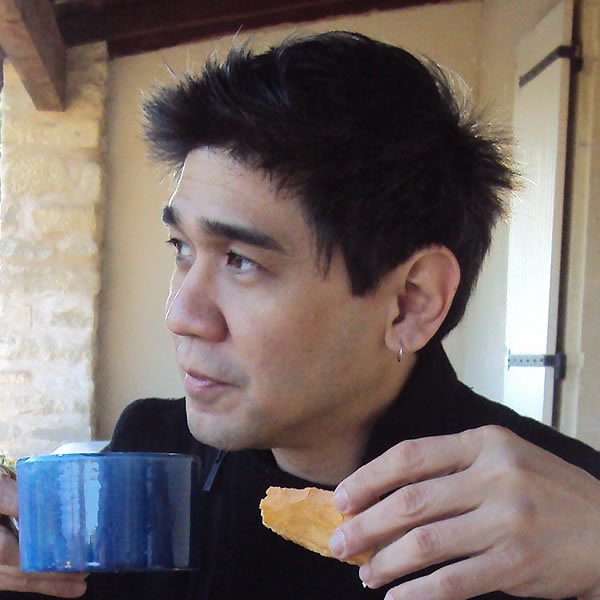
Joby finished his theology courses on doctrine, scripture, liturgy, and catechism from the satellite program of the University of Notre Dame. He is a contributing writer at theCatholicTalks.com, and catholic365.com where some of his articles have been translated into different languages for different websites around the world. He is passionate about suffrage for the souls in purgatory and maintains IndulgenceCooperative.org
He teaches multimedia arts at a prominent arts and design school where he engages students in conversations about religion, spirituality, pop-culture, and food.
Feel free to contact him if you want a talk in your organization.